
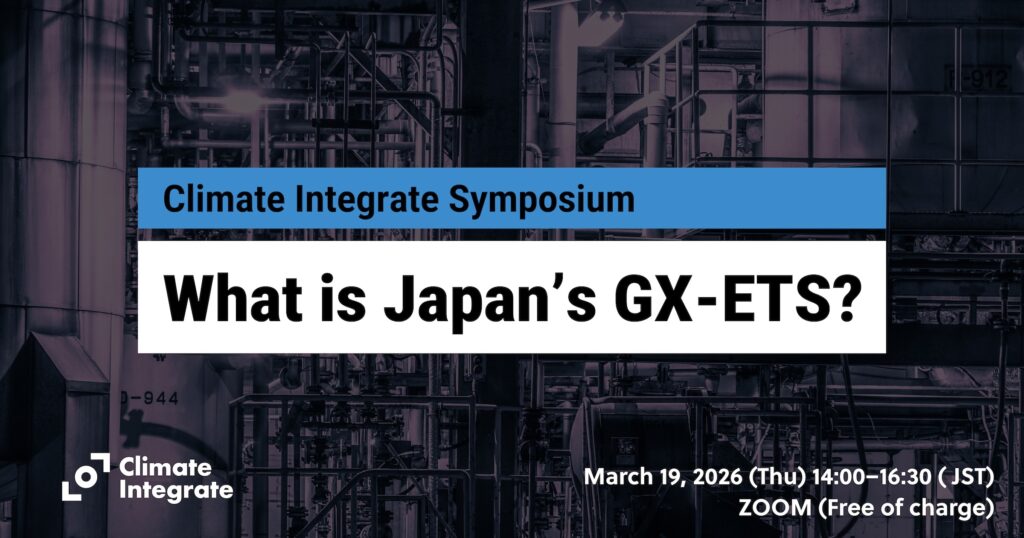
Japan will officially launch its national emissions trading system (GX-ETS) in April 2026. What exactly is GX-ETS? How does the system work? What impact will it have on greenhouse gas reductions, corporate climate strategies, and Japan’s broader decarbonization pathway?
Climate Integrate invites you to a symposium that will bring together policymakers, experts, and stakeholders to deepen understanding of the system. The event aims to provide clear insights into the system while fostering dialogue on its implications for climate policy and corporate action.
Schedule / How to participate
Date & Time: March 19, 2026 (Thu) 14:00-16:30 (JST)
Language: Japanese and English (simultaneous interpretation available)
Online attendance: Free of charge. For registration, click here (pre-registration required)
Program
14:00 Introduction
Part I: What’s GX-ETS?
- Overview of GX-ETS
Masaharu Ohara, Senior Deputy Director, Environmental Economy Office, GX Group, Ministry of Economy, Trade and Industry (METI) Material ▷ EN - Key Features and Significance of GX-ETS
Prof. Toshihide Arimura, Waseda University Material ▷ EN - Key Issues of GX-ETS
Kimiko Hirata, Executive Director, Climate Integrate Material ▷ EN
Part II: Panel Discussion “GX-ETS Implementation and the Future of Climate Policy in Japan”
Panelists:
・ Prof. Karsten Neuhoff, DIW Berlin (online) Material ▷ EN
・ Takafumi Tsubakino, Climate Change Department, Tokyo Metropolitan Government Material ▷ EN
・ Prof. Toshihide Arimura, Waseda University
・ Yuka Manabe, Corporate Analyst, Climate Integrate
Facilitator: Kimiko Hirata, Executive Director, Climate Integrate
16:30 Closing
Speakers

Masaharu Ohara
Senior Deputy Director, Environmental Economy Office, GX Group, Ministry of Economy, Trade and Industry (METI)
Masaharu Ohara joined the Ministry of Economy, Trade and Industry in 2011. In 2021, he was seconded to the Wakayama Prefectural Government (Director, Growth Industry Promotion Division).
In 2025, he was assigned to the Environmental Economy Office, GX Group, Ministry of Economy, Trade and Industry, where he currently serves.
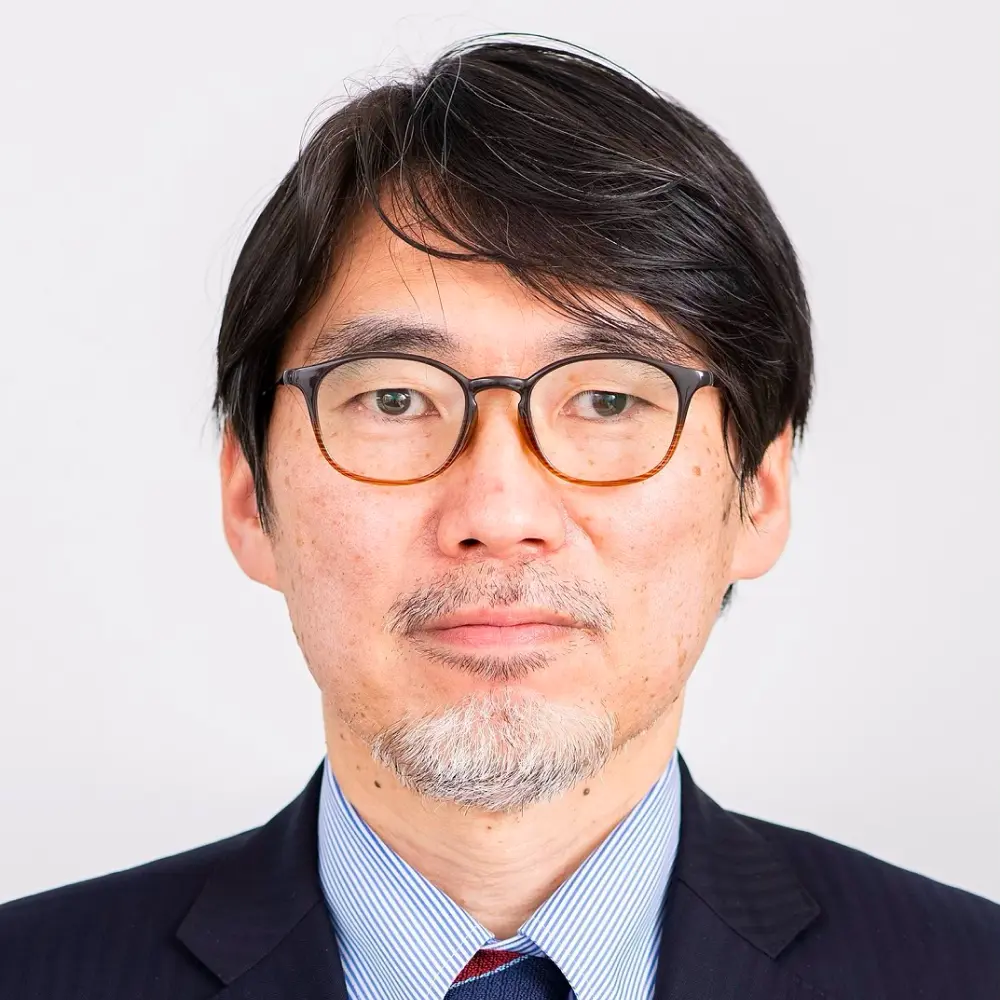
Toshi H. Arimura
Director, Research Institute for Environmental Economics and Management
Professor, School of Political Science and Economics, Waseda University
Toshi H. Arimura is a Professor of Political Science and Economics at Waseda University, Tokyo. He previously served as a Professor at Sophia University and has been a visiting scholar at George Mason University, Resources for the Future, the Paris School of Economics, and Sciences Po. His research focuses on climate change, energy policy, and air pollution regulation. His work has appeared in leading academic journals, and he is a co-editor of Carbon Pricing in Japan (Springer), which received the SEEPS Commentary Award. He holds a Ph.D. in Economics from the University of Minnesota, an M.Sc. in Environmental Sciences from the University of Tsukuba, and a B.A. in the History of Science from the University of Tokyo. He has served on numerous Japanese government committees on environmental policy, including carbon pricing, and has chaired several of them. He has received several awards, including the Ichimura Prize in Science and the SEEPS Outstanding Publication Award, and is an Associate Member of the Science Council of Japan. His forthcoming book, Economic Analysis of Carbon Pricing: Implications for GX-ETS, will be published by Nikkei BP in June 2026.

Karsten Neuhoff
Professor, Institute of Economics and Business Law, Technical University Berlin
Head of Climate Policy Department, DIW Berlin
Karsten Neuhoff is Professor at the Institute of Economics and Business Law at Technical University Berlin and Head of the Climate Policy Department at DIW Berlin. His topic: How to design carbon pricing, power market design and further policies for an economically and socially successful transformation to climate neutrality? Based on independent scientific research he engages in mutual transfer between science, politics and other stakeholders, for example in the Sustainable Finance Advisory Council of the German Federal Government. He leads policy advice projects for the German government and the EU Commission and has published 48 journal articles and 4 books. Karsten Neuhoff holds a Master in Physics from the University of Heidelberg and a PhD in Economics from the University of Cambridge.
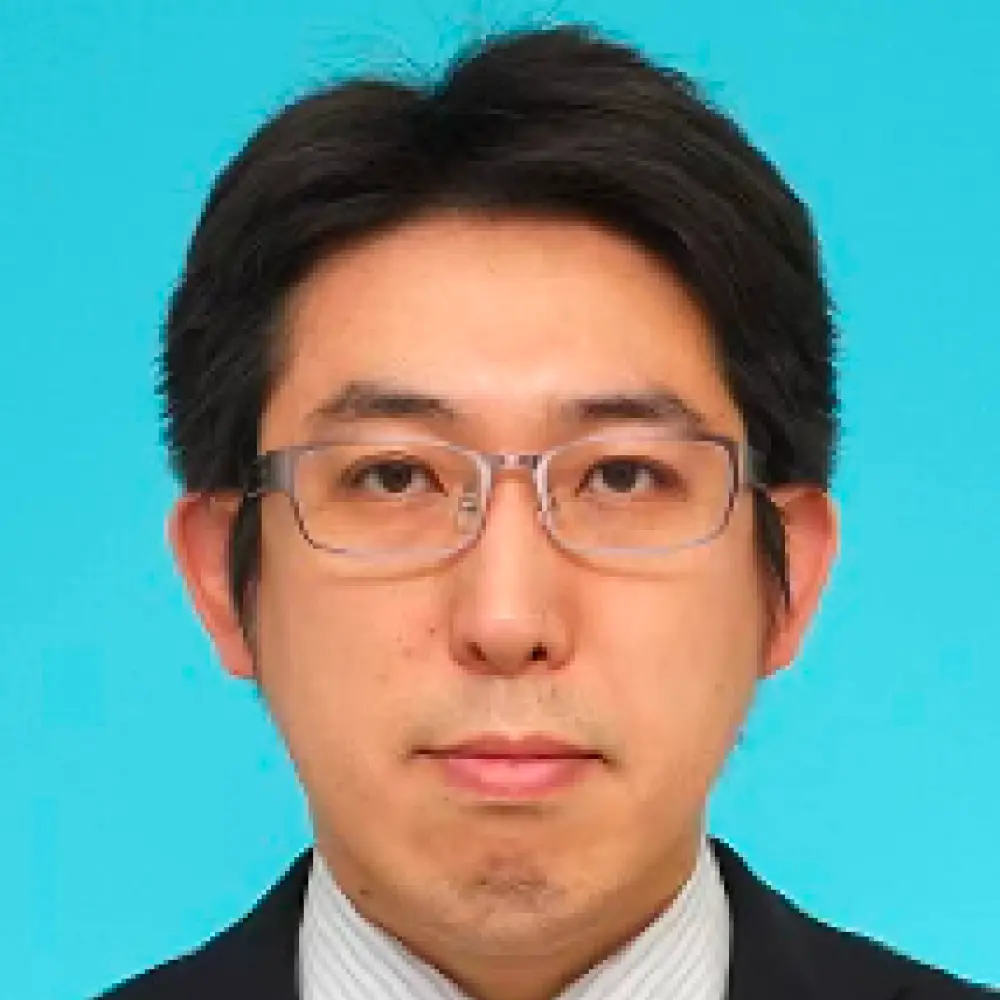
Takafumi Tsubakino
Director, Emission Cap and Trade Section
Climate Change Division, Tokyo Metropolitan Government
Takafumi Tsubakino joined the Tokyo Metropolitan Government in 1997. Since then, he had worked on the planning, design, and maintenance of sewerage facilities and was also involved in the construction of the Toyosu Market. After his promotion to a managerial position, he was responsible for venue development for the Tokyo 2020 Olympic and Paralympic Games. Currently, he oversees the design and implementation of systems for reducing total greenhouse gas emissions, promoting effective decarbonization measures through data-driven policymaking and collaboration between the public and private sectors.

Kimiko Hirata
Climate Integrate Executive Director
After working for a publisher in Japan and gaining experience with a US NGO, Kimiko worked with Kiko Network, a Japanese non-profit climate NGO, from 1998 until 2021. She has over 20 years of experience relating to international climate conference under the UN Framework Convention on Climate Change and in analyzing and communicating about climate and energy policies. Concerned about a new boom in coal power plant construction in Japan after the 2011 Fukushima Daiichi nuclear power plant disaster, she engaged in a multipronged campaign to fight coal and shareholder activism, culminating in the cancellation of many plans. In recognition of her efforts, she was named a recipient of the Goldman Environmental Prize in 2021, selected for the BBC’s 100 Women list in 2022. She established Climate Integrate in 2022 with the aim of providing fact-based information and supporting multiple actors’ decarbonization efforts in Japan and abroad. She is also a visiting associate professor at Chiba University of Commerce Graduate School, and an environmental policy advisor for Ichikawa City. Kimiko has a PhD in social sciences from Waseda University in Tokyo.

Yuka Manabe
Climate Integrate Corporate Analyst
Yuka began her sustainability career in 2017. During her time at ISS ESG, she served in various capacities, conducting corporate sustainability assessments with a focus on the financial industry, supporting clients with sustainability assessments of real estate and infrastructure projects and climate reporting as well as producing research on corporate political contributions and circular economy. In 2022, she relocated from Munich to Tokyo and transitioned to a product management role, where she developed and managed a diverse portfolio of ESG products for institutional investors. Through her academic studies, volunteer work, and professional experiences across Europe, South America, and Africa, Yuka has gained valuable intercultural insights and diverse global perspectives. Driven by a desire to actively contribute to a just climate transition in Japan and globally, she joined Climate Integrate in April 2025.
Yuka holds a Master’s Degree in International Economics from the University of Tübingen, Germany.
