

Introduction
The Asia Zero Emission Community (AZEC) is a platform led by the Japanese government, launched in March 2023, to promote cooperation in Asia. AZEC brings together governments, public agencies, and private-sector entities to advance cooperation across a wide range of technologies and projects, with a particular emphasis on diverse pathways toward net zero, economic development and energy security.
This insight provides an update on AZEC’s developments, focusing on key meetings, institutional evolution, and emerging cooperation trends observed in 2025. It builds on our report, What’s AZEC? published in July 2025, which examined the establishment of AZEC, its positioning within Japan’s Green Transformation (GX) strategy, and trends with the Memorandums of Understanding (MoUs) up to 2024. In addition, an overview of AZEC’s background, governance structure, and early implementation can also be found in the report.
Updates from AZEC Meetings in 2025
Since its official launch at the first ministerial meeting in March 2023, AZEC has held six meetings — three ministerial and three leaders’ meetings. In 2025, the third Ministerial Meeting was held in Kuala Lumpur in October 2025, and the Third Leaders’ Meeting convened shortly thereafter (Figure 1). The discussions focused primarily on advancing the implementation of cooperation areas agreed in previous meetings, with reference to the 10-year Action Plan for the Next Decade adopted at the Second Leaders’ Meeting.
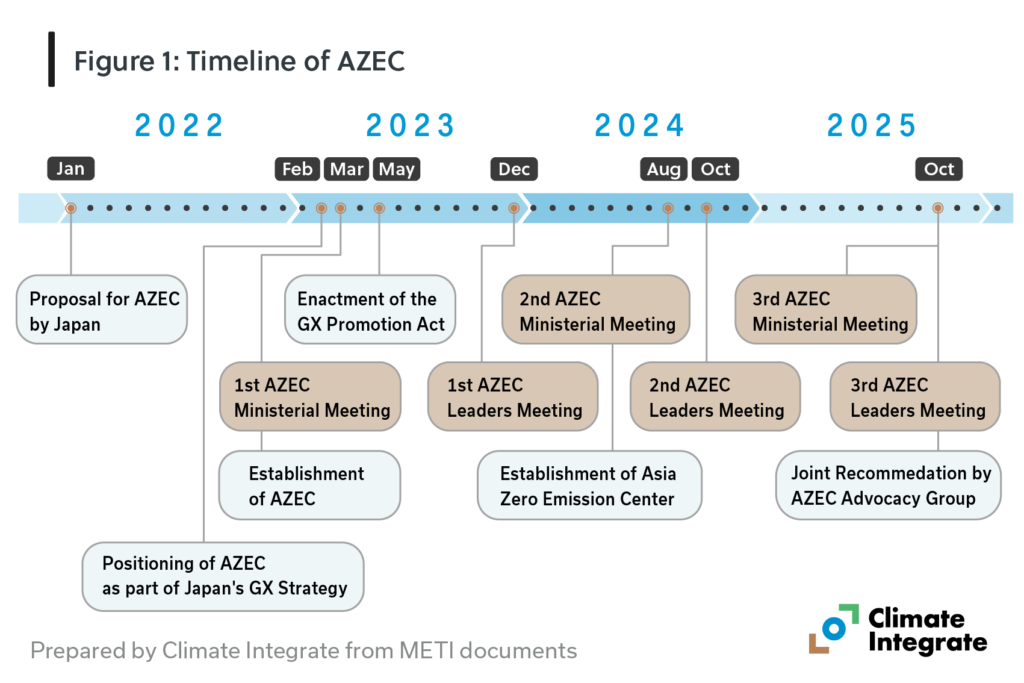
With the continued increase in the MoUs under AZEC, participants emphasized the need to accelerate the translation of these agreements into tangible projects, measurable progress, and on-the-ground implementation. The Joint Recommendation published by the AZEC Advocacy Group at the 3rd Ministerial Meeting urged deeper cooperation across governments, industry, and finance to address regulatory, financing, and project challenges, and called on AZEC to promote unified standards, transparent carbon markets, and scalable decarbonization projects to support just and inclusive energy transitions across Asia.
AZEC MoUs and Project trends since 2024
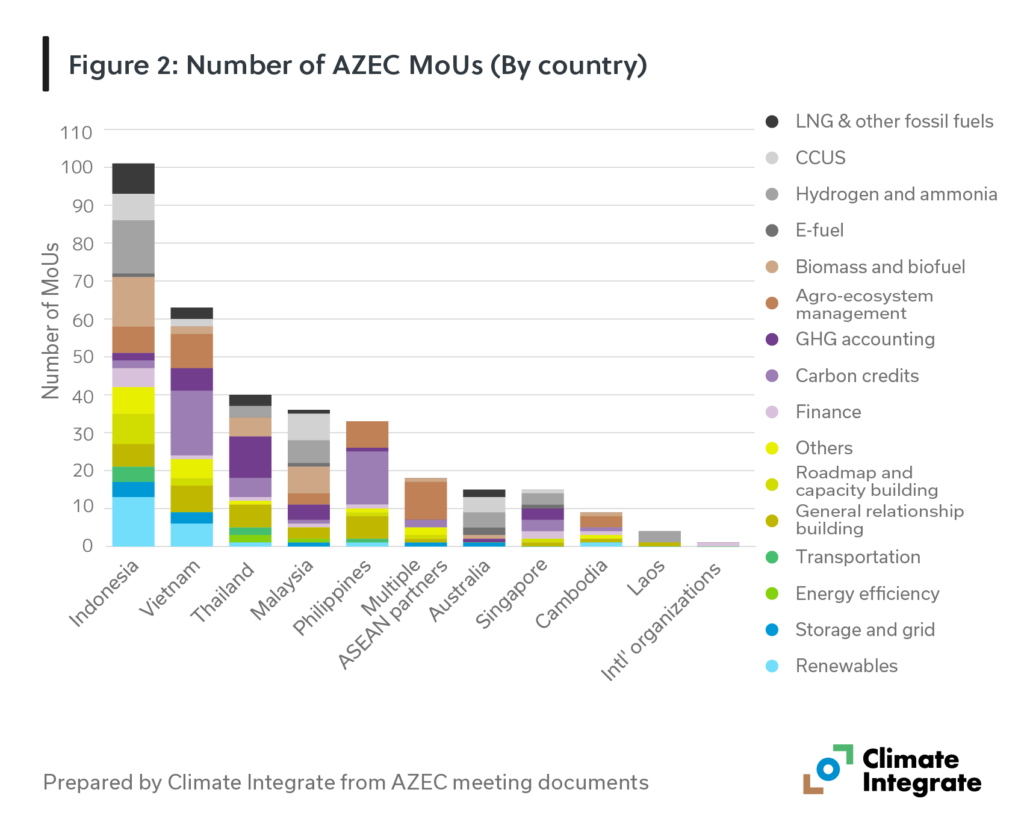
The number of MoUs under AZEC had increased from 217 in 2024 to 335 in 2025, with additional agreements signed across multiple partner countries.
It shows a continued concentration of MoUs with Indonesia further reinforcing its position as the most active partner. Vietnam, Thailand, Malaysia and Philippines remain the next most engaged countries, while participation from other ASEAN member states and international organizations remains limited. The overall geographic pattern of AZEC cooperation has remained largely unchanged and still uneven across partner countries (Figure 2).
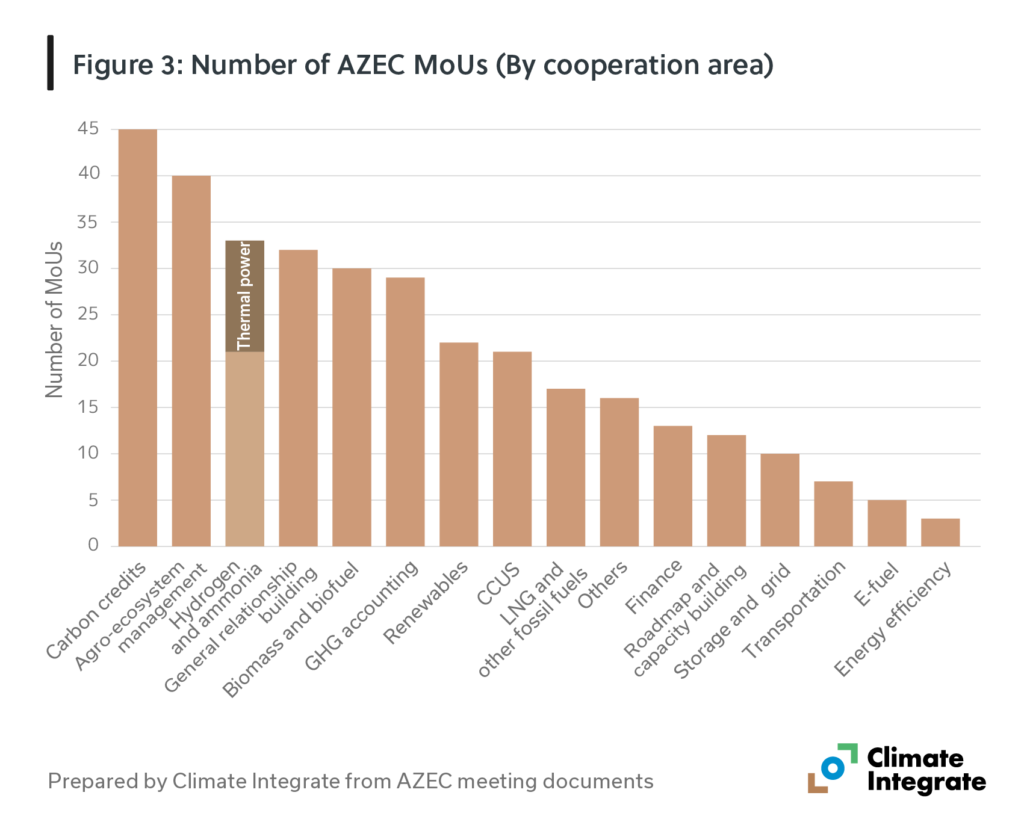
MoUs related to carbon credits and agro-ecosystem management have become the largest areas of cooperation in 2025 (Figure 3). Fuel-related cooperation, such as hydrogen and ammonia, biomass and biofuel, and LNG, remained prominent.
Despite incremental diversification, renewable energy and energy efficiency projects continued to represent a small share of the overall AZEC project portfolio.
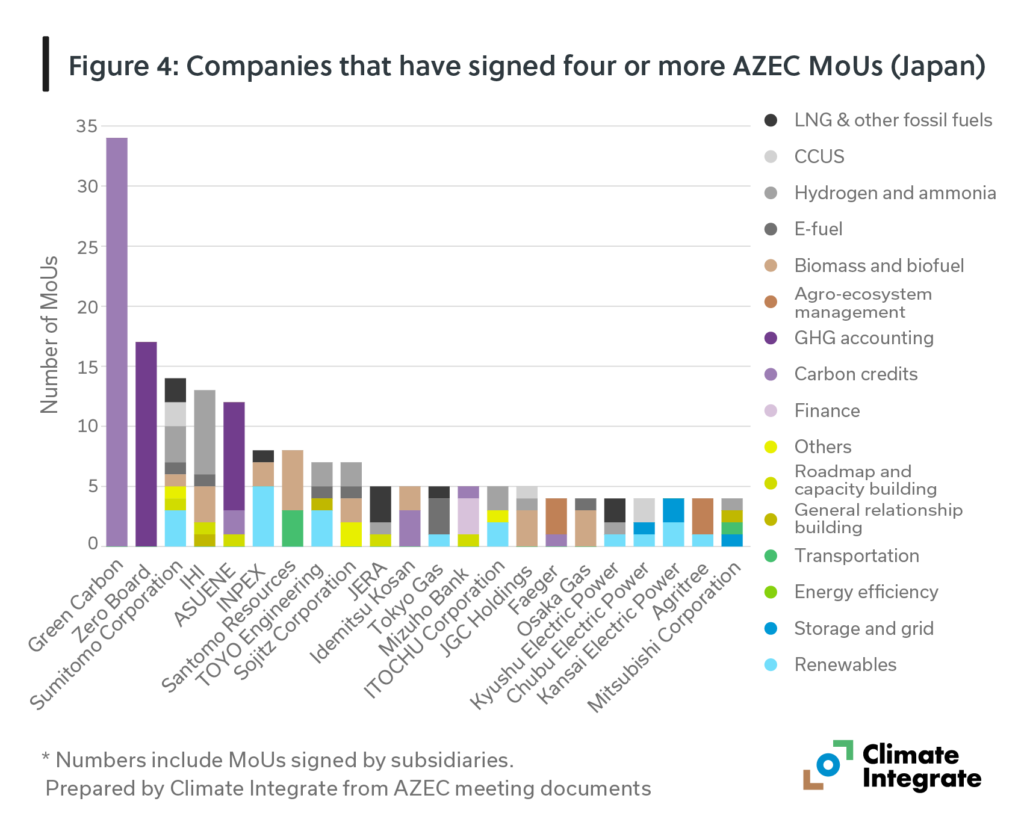
Japanese companies in carbon credits and GHG accounting are associated with the highest number of MoUs in 2025, while hydrogen/ammonia-related activities remain prominent (Figure 4).
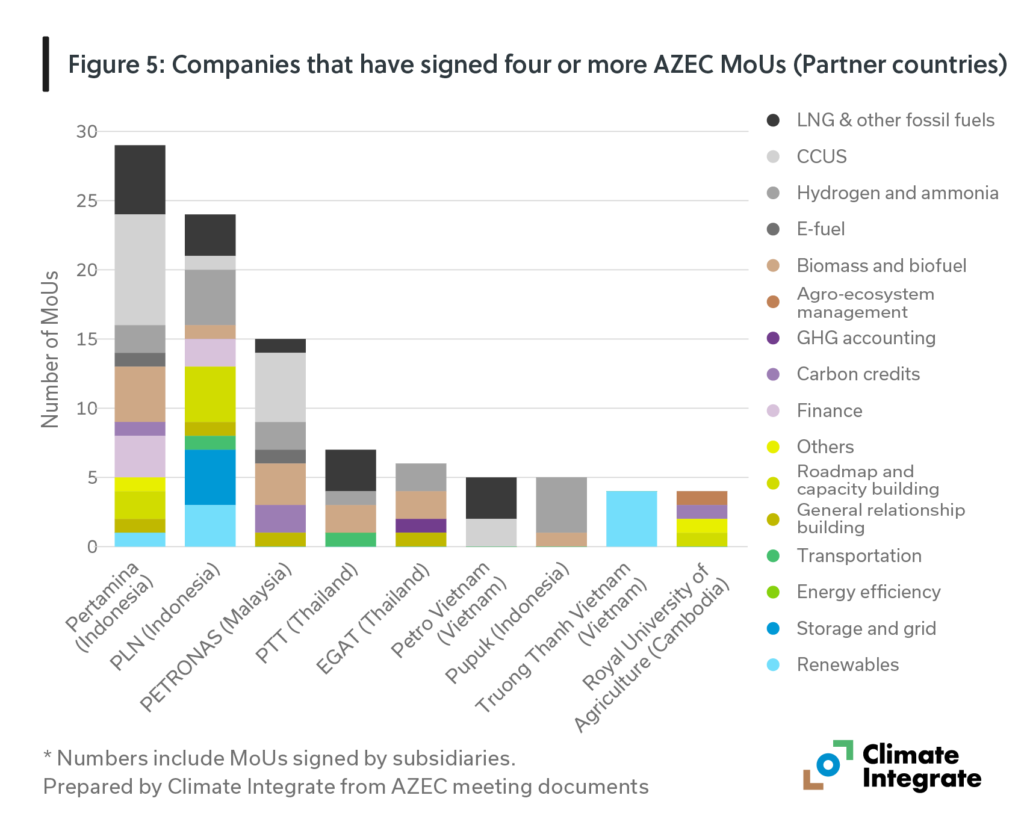
MoUs among partner country companies remain concentrated in a small number of large energy firms, led by Pertamina and PLN in Indonesia, followed by PETRONAS in Malaysia and major utilities in Thailand (Figure 5). Cooperation continues to focus primarily on fuels, CCUS, and hydrogen/ammonia, while participation from companies in other sectors and from less-represented countries remains limited.
Conclusion
This update on AZEC in 2025 presents the new trend of growing interest in carbon credits, while its structure and focus on fuels and hydrogen/ammonia remain unchanged. It reflects a growing interest in carbon credits among the Japanese government and Japanese companies as the mandatory GX-ETS will start from FY2026. Under the GX-ETS, the companies can use credits from the Joint Crediting Mechanisms (JCM) and domestic J-Credit system to cover up to 10% of their actual emissions. It will be important to monitor how AZEC projects will be integrated with the GX-ETS.
Going forward, it is important that cooperation under AZEC will need to prioritize technologies that can accelerate emissions reduction in response to the energy transition needs toward carbon neutrality of ASEAN countries. The next AZEC meetings are scheduled to be hosted by the Philippines in 2026.
