


Climate Action in Homes and Buildings
Homes and buildings protect us from wind, rain, sun, and outdoor hazards, and serve as bases for daily life, work, study, and leisure. At the same time, they consume large amounts of energy. Let’s look at measures for homes and buildings from the dual perspectives of comfortable living and climate change.
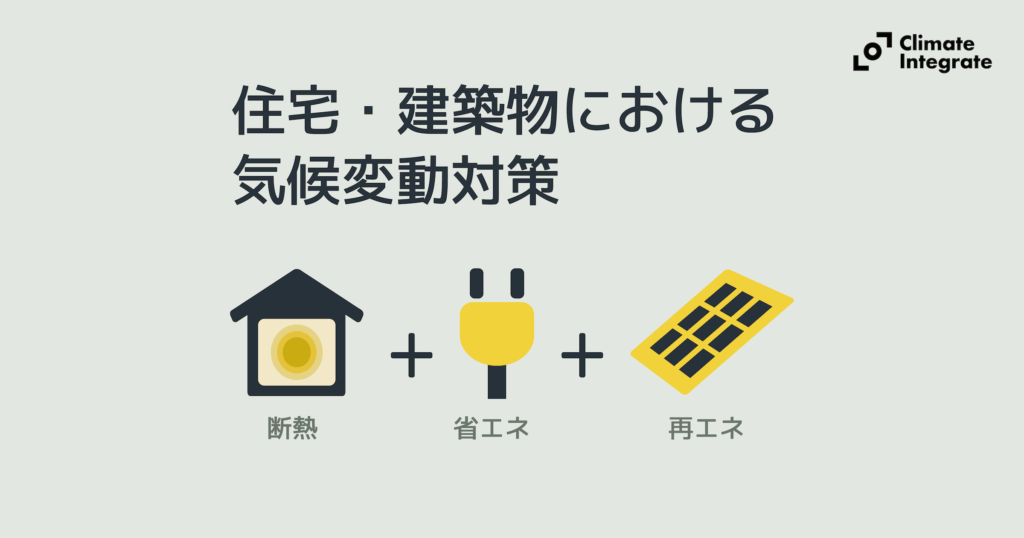
Cutting CO2 while improving comfort and health
I. Housing conditions in Japan
Homes that are bad for health and the climate: hot in summer, cold in winter
Keeping indoor temperatures in a moderate range is important for healthy living, but many homes in Japan are still hot in summer and cold in winter.
On heat, the World Health Organization (WHO) recommends keeping indoor temperatures below 32°C throughout the day and below 24°C at night as a global standard, and proposes measures people can take themselves. On cold, because low indoor temperatures can seriously harm health, WHO recommends keeping indoor temperatures at 18°C or higher in winter.
In Japan, however, only about 10% of homes meet WHO’s recommended living-room temperatures in winter, and cold homes in winter have become the norm.
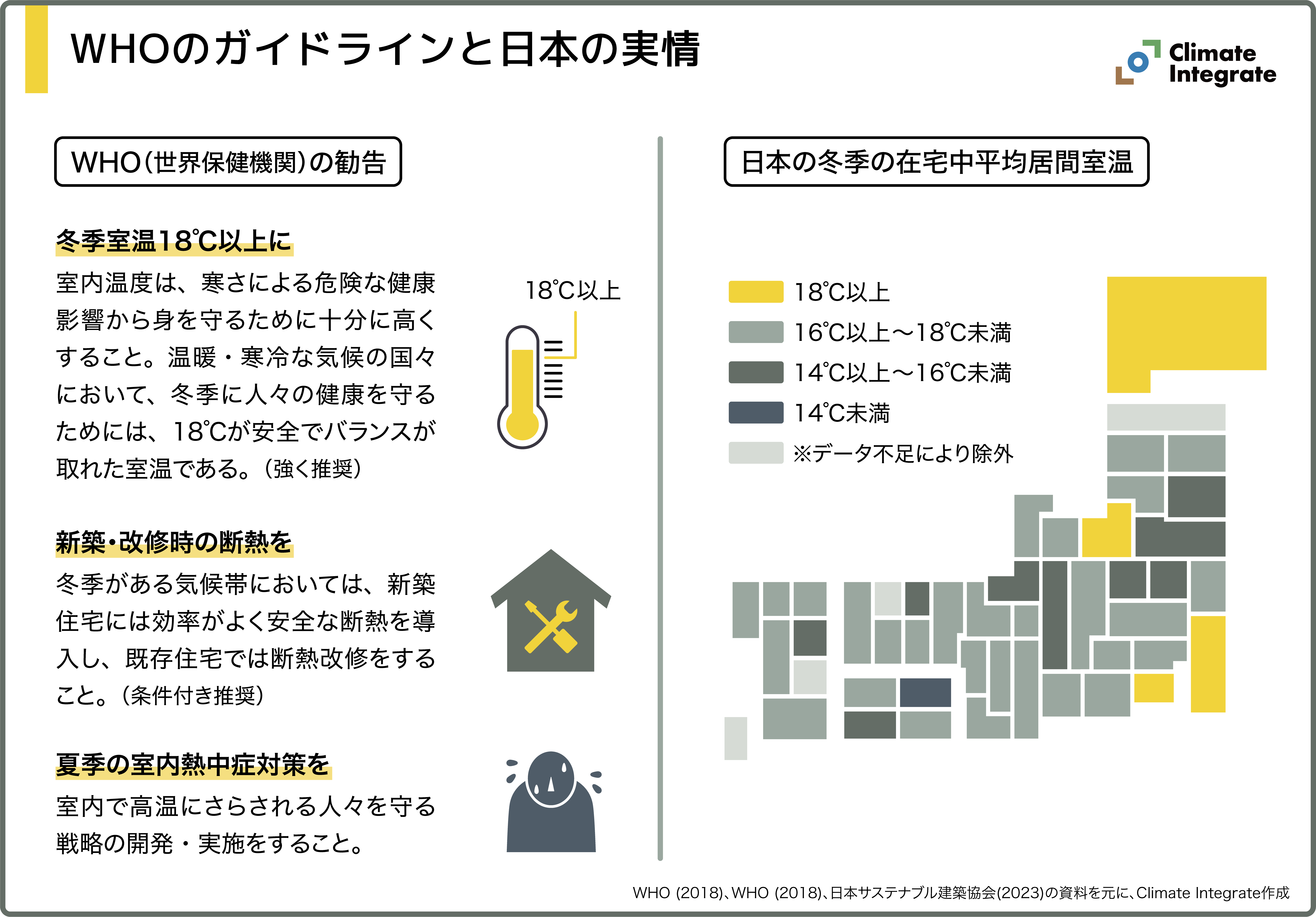
WHO (2018)、WHO (2018)、Japan Sustainable Building Consortium (2023); prepared by Climate Integrate
II. Cold homes pose many health risks
WHO(2018)、Japan Sustainable Building Consortium (2023); prepared by Climate Integrate
Living in a cold home raises health risks through higher blood pressure and worsening of asthma and mental health. Moving from a warm living room to a cold changing room or bathroom and then into a hot bath also carries a risk of heat shock, which can cause cerebral hemorrhage, myocardial infarction, or stroke.
Japan’s Consumer Affairs Agency warns that as people age, the body’s ability to keep blood pressure stable declines, so sudden temperature-related swings in blood pressure can reduce cerebral blood flow and cause loss of consciousness—and if this happens during bathing, it can lead to drowning. It therefore advises warming the bathroom and changing area before bathing. Far more people die from heat shock than from traffic accidents.
As a measure against cardiovascular disease, the Ministry of Health, Labour and Welfare has set a goal of lowering average systolic blood pressure by 4 mmHg among people aged 40–80, estimating this could reduce stroke deaths by about 10,000 per year. Poor insulation has also been shown to raise blood pressure and blood lipids (cholesterol), and studies find improvements when insulation performance is raised. Living in a warm home helps us live healthier lives.
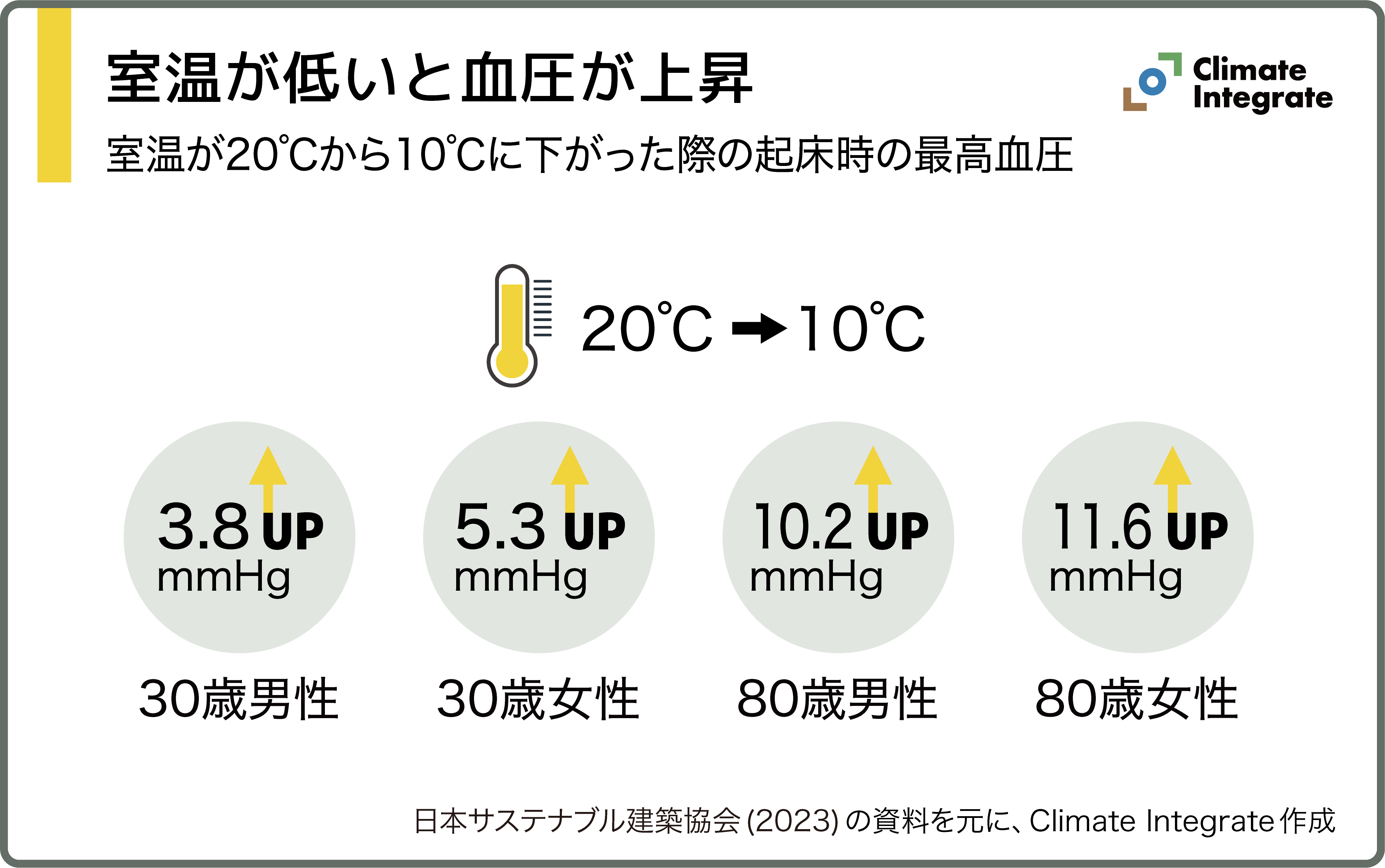
Japan Sustainable Building Consortium materials (2023); prepared by Climate Integrate
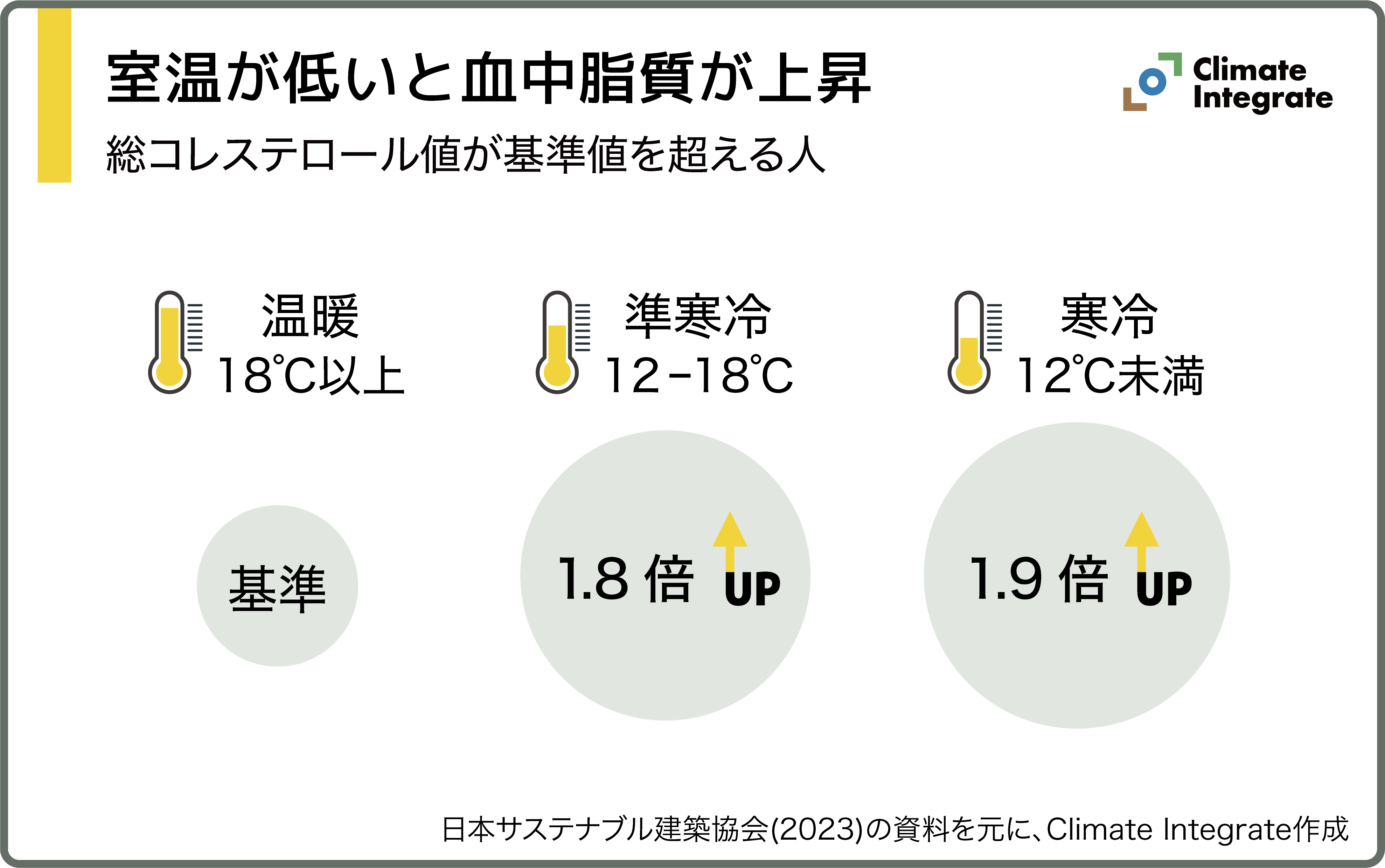
Japan Sustainable Building Consortium materials (2023); prepared by Climate Integrate
III. Lagging policy responses
About 90% of the housing stock has “no or low insulation”
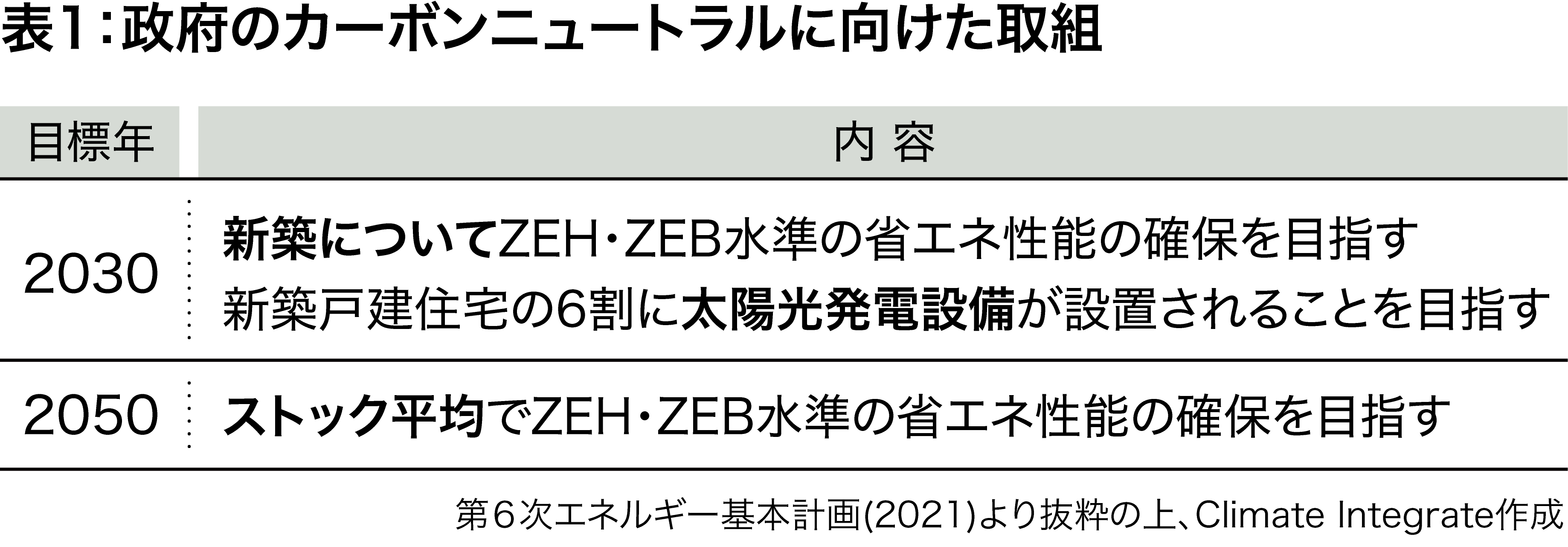
6th Strategic Energy Plan (2021); excerpted and prepared by Climate Integrate
Japanese homes are hot in summer and cold in winter largely because of poor insulation. Poor insulation increases use of air conditioners and heaters and raises utility bills, and heating and cooling are less effective. Even today, about 90% of Japan’s housing stock has no or low insulation (Figure 1), and about 70% of windows—where heat escapes most easily—remain single-pane glass. Insulation measures also lag in many private facilities such as offices, hospitals, and hotels, and in public facilities such as kindergartens, daycare centers, schools, and elderly care facilities.
Rooftop solar PV installation also remains limited: only about 6.3% of homes (FY2021). Some factories, office buildings, and schools have installed panels, but uptake is still limited overall.
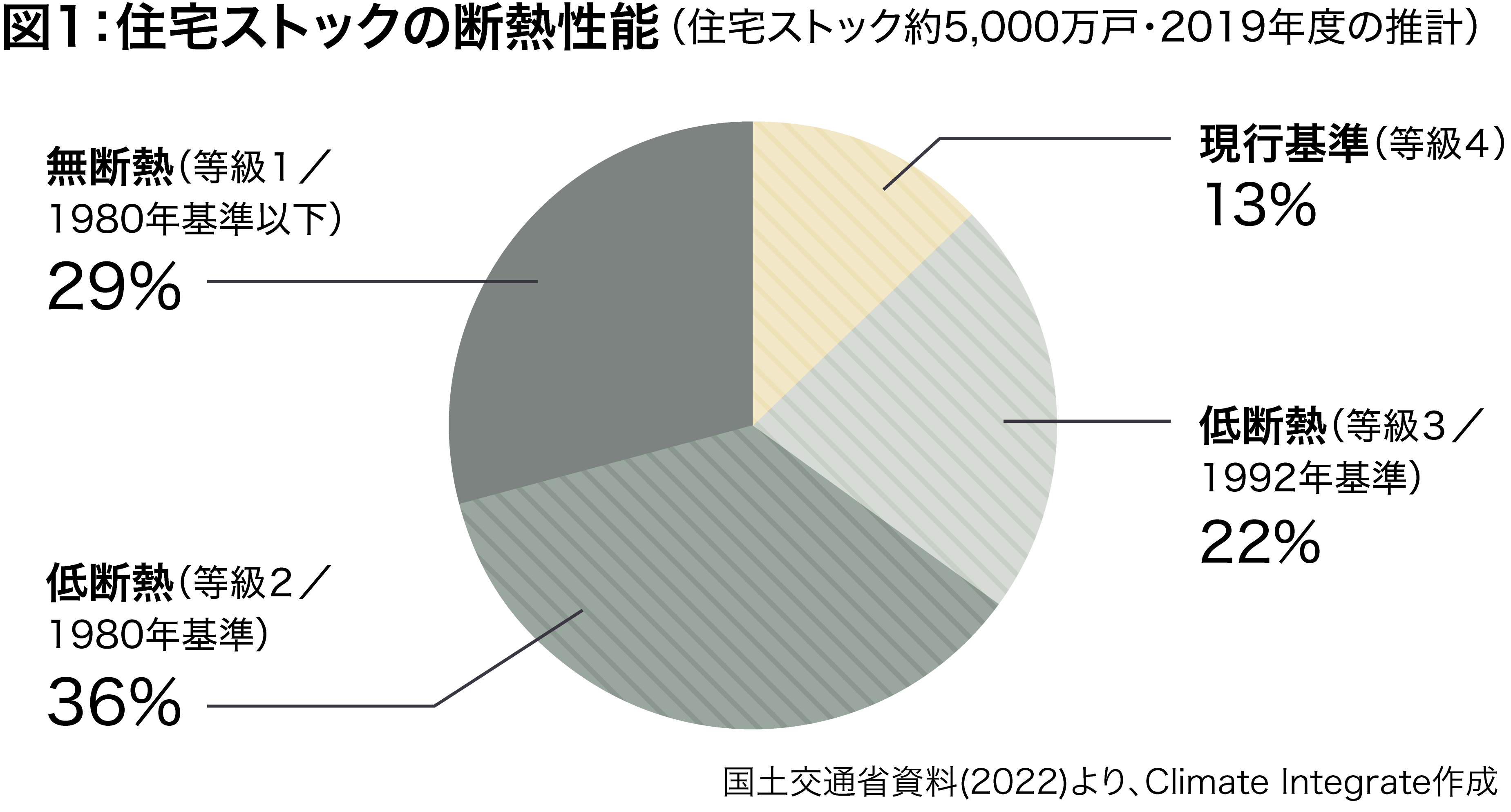
Ministry of Land, Infrastructure, Transport and Tourism materials (2022); prepared by Climate Integrate
The government has set targets to achieve ZEH (net-zero energy house) and ZEB (net-zero energy building) performance (Table 1) and, from 2025, has made compliance with building energy-efficiency standards mandatory. However, those standards (for homes, “Grade 4”) remain very lenient by international comparison (Figures 2 and 3). Raising standards above ZEH/ZEB levels is needed to achieve greater energy savings.
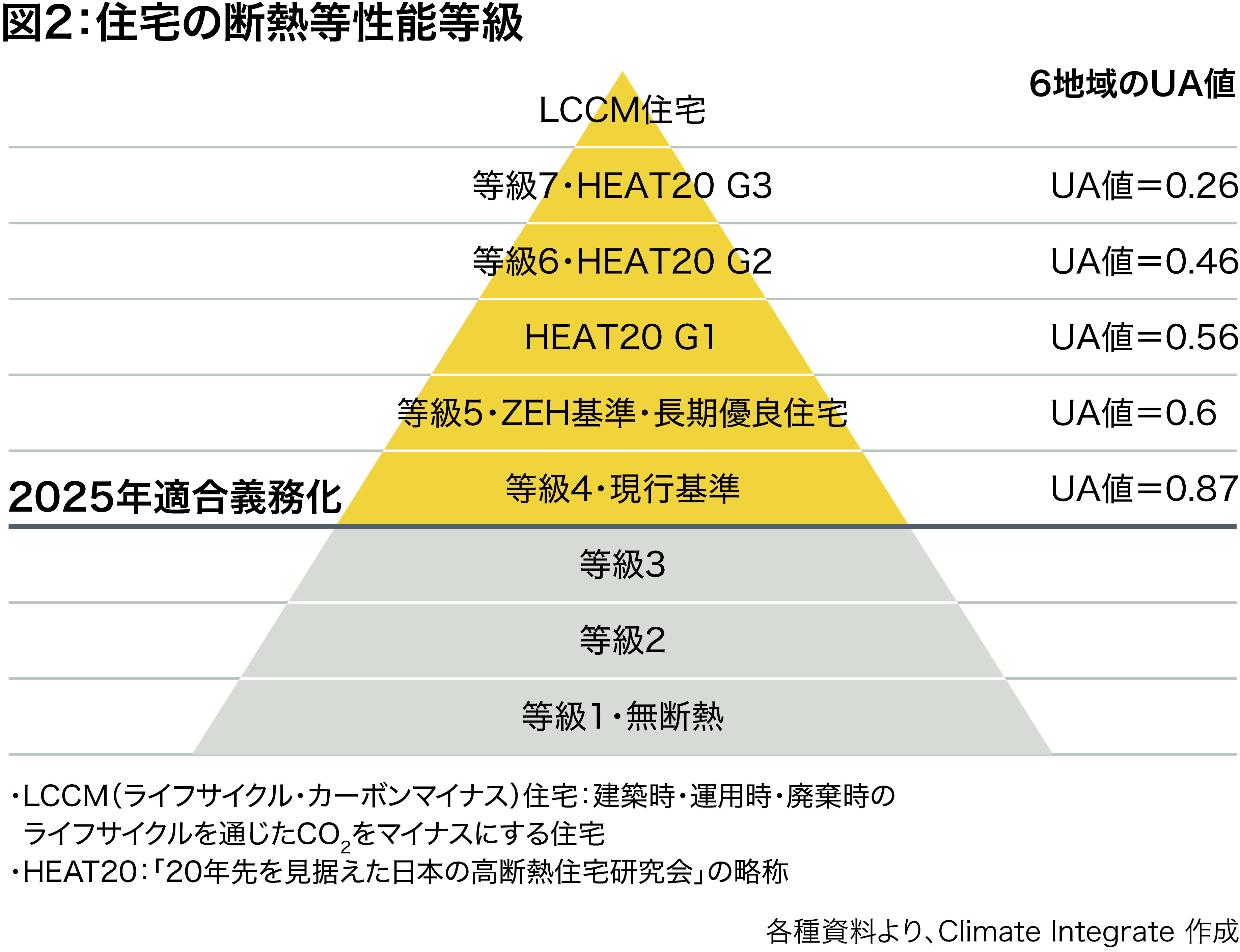
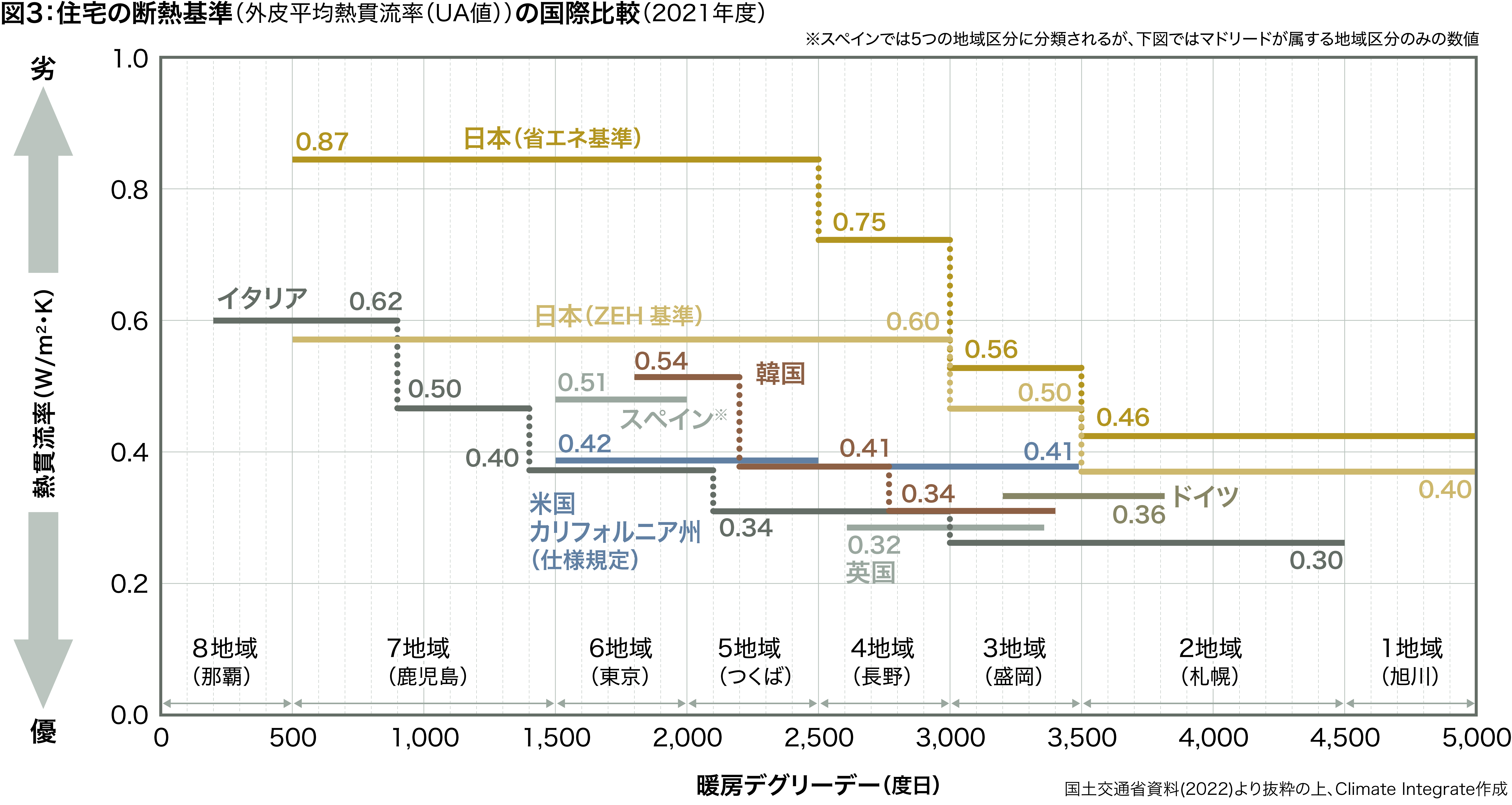
Ministry of Land, Infrastructure, Transport and Tourism materials (2022); excerpted and prepared by Climate Integrate
IV. The way forward for homes and buildings
MLIT materials (2021) and other sources; prepared by Climate Integrate
CO2Toward zero-energy homes and buildings
To bring energy use and CO2 emissions toward zero, it is important to advance “insulation,” “energy efficiency,” and “renewables” together.
Measures for homes and buildings contribute to CO2 reductions while improving comfort, promoting health, and lowering utility bills. Rather than enduring heat and cold, let’s take effective measures while confirming the benefits.
Strengthening measures for homes and buildings
- National government
- Raise insulation standards to Grade 6 or higher
- Make renewables standard in new construction
- Expand support for existing buildings
- Regulate excessive large-scale development
- Prioritize support for vulnerable and low-income households
- Local governments
- Make public facilities ZEB
- Standardize Grade 5
- Incentives toward Grade 6 or higher
- Make renewables standard in new construction
- Support for insulating existing homes
- Advice for businesses and residents
- Make use of subsidies
- Businesses
- Conduct energy audits
- Make factories/facilities ZEB when expanding or renovating
- Install or purchase renewables for factories/facilities
- Make use of subsidies
- Individuals
- Insulation upgrades and solar-gain control (eaves, insulated blinds, etc.)
- Check and replace inefficient appliances
- Install renewables
- Switch electricity providers (power shift)
- Use energy effectively (batteries, EVs, etc.)
- Make use of subsidies
Authors: Kimiko Hirata and Atsuko Kawaguchi