


Living with 40°C Days
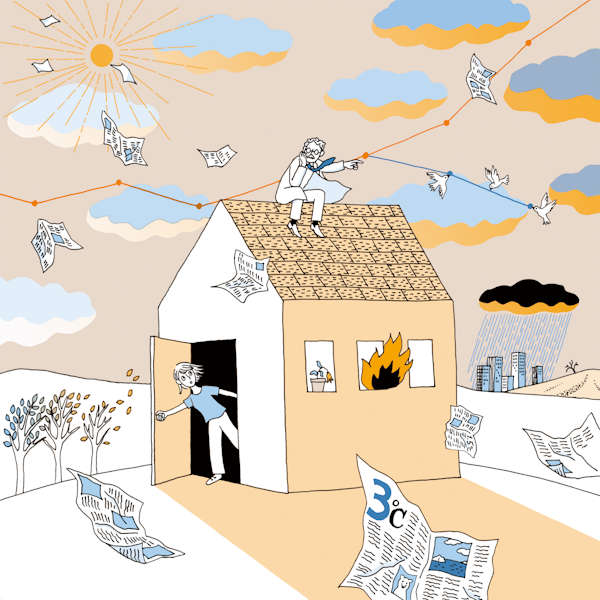
Climate change: A threat close to home
Scorching summer heat. Extreme temperatures. Increasingly frequent linear rainbands bringing torrential rain. News of extreme weather seems to arrive almost every day. Some of these events may already feel very personal: frightening experiences of torrential rain, health problems caused by extreme heat, flood damage to homes, belongings, and cars, or crops that failed to grow. The impacts disrupt daily life, damage our health, and contribute to rising prices. And this is not only happening in Japan. In Nepal, melting mountain glaciers have contributed to devastating debris flows that have swept through communities downstream. In Europe, including France and Spain, extreme heat has claimed many lives.
These events are linked to climate change. According to the Japan Meteorological Agency, some extreme weather events would not have occurred without human-caused climate change. They are not simply natural phenomena.
This could become a world where 40°C temperatures are a part of everyday life.
Not just accepting this as natural change, let’s look more closely at climate change and the threats it is bringing closer to home.
The planet is warming – and more to come
The data clearly show that the planet is warming. The Intergovernmental Panel on Climate Change (IPCC), whose assessments draw on the work of scientists and governments around the world, has concluded that human influence on climate change is “unequivocal.”
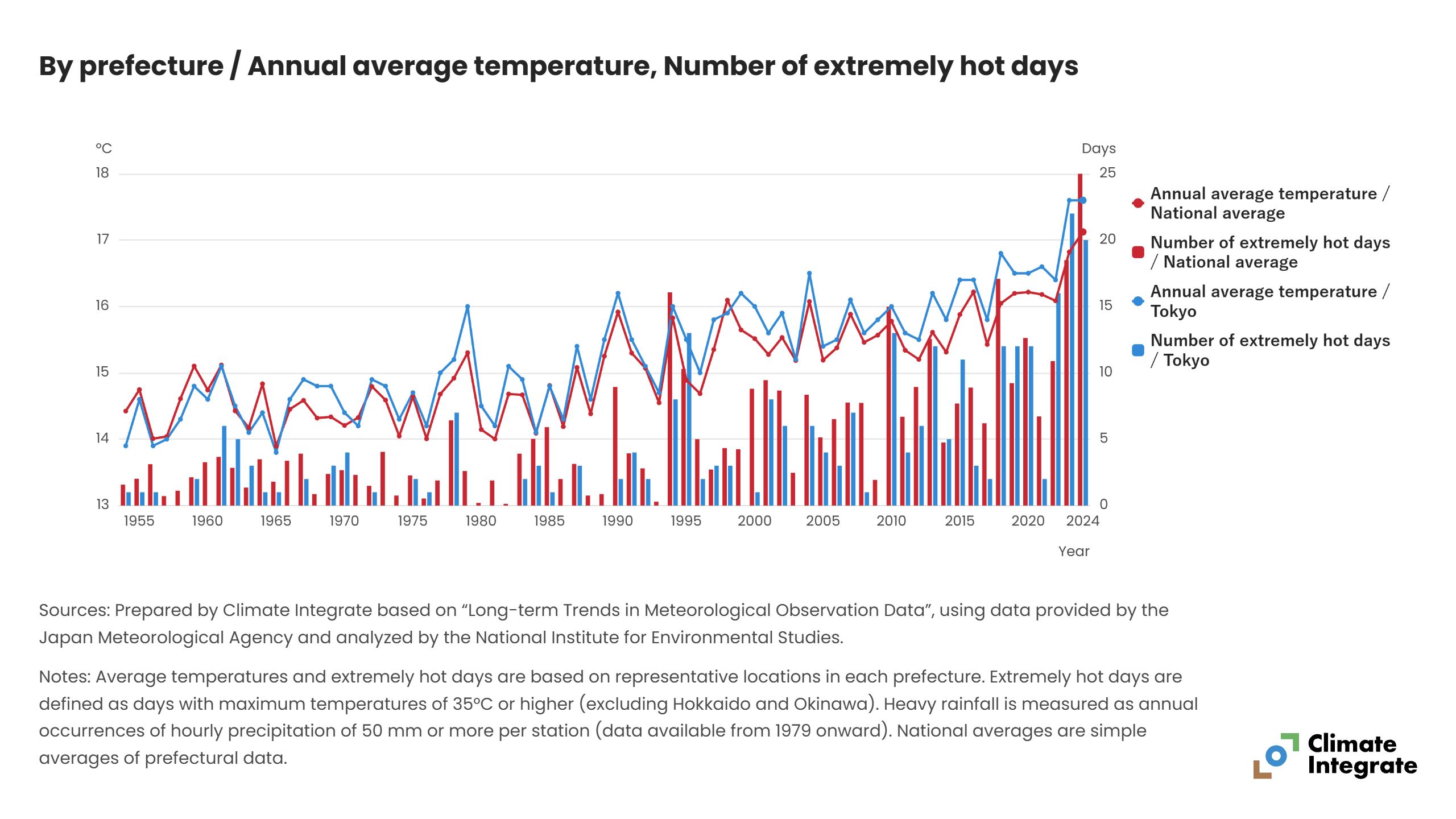
Climate change is already contributing to a wide range of extreme weather events. Using the data, we can compare rising temperatures in different parts of Japan with trends in extreme heat and heavy rainfall. The trends broadly track the rise in average temperatures.
From our Data Explorer
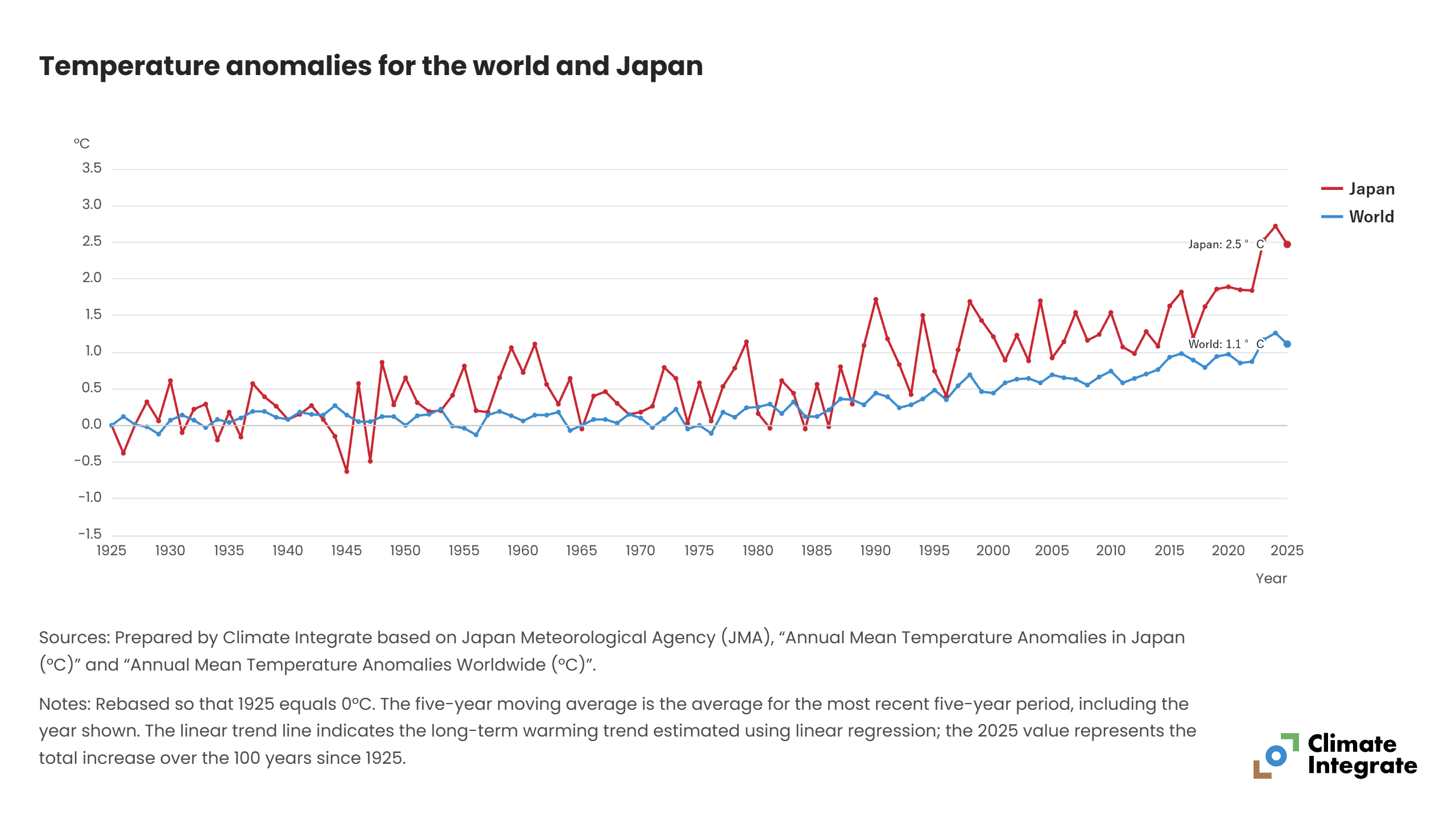
Around the time of the Industrial Revolution in the mid-1800s, humanity’s use of fossil fuels began to increase dramatically. Since then, we have continued to emit large quantities of carbon dioxide (CO₂) and other greenhouse gases. These emissions have now pushed the global average temperature to nearly 1.5°C above pre-industrial levels. If current pace continues, warming could approach 3°C by 2100.
A change of 1.5°C in the Earth’s annual average temperature is very different from a 1.5°C change in the weather from one day to the next. Warming on this scale is unprecedented in at least the past 2,000 years. It is already disrupting a once relatively stable climate and contributing to major changes across the planet. If warming reaches around 3°C, the likelihood of severe and irreversible environmental damage rises dramatically. Without action now, there could be irreversible impacts.
Many ways to act
There is no reason to give in to despair. Climate change is a problem caused by human activity, which means that solutions are also in our hands. If we choose to build a more sustainable society, we can slow the rise in temperature and limit the damage. What we need is to face the crisis directly, identify what can be done from our respective positions and through different approaches, and act quickly and boldly.
Climate action does not have to mean sacrifice or hardship. In many ways, it means the opposite.
It means protecting nature and biodiversity, food, jobs, culture, and sport. It means building a society in which people of every generation, everywhere, can live in peace. It can help create greater well-being and a better quality of life.
It also means transforming systems built around fossil fuels and shifting toward energy systems centered on renewable energy. Through that transition, we can also reshape our relationship with the world around us, the ways we work, the ways decisions are made, and even the values that shape society to meet the needs of changing times.
There are many ways we can act.
And everyone can be part of the solution.
Written by Kimiko Hirata
Illustration by Saori Otsuka